Loverock Road, Reading
- 360 Garage
- 360 Alloys
Garage, MOT, diagnostics, mechanical repairs, performance and alloy-wheel refurbishment.
119 Unit 4 Loverock Road, Reading, RG30 1DZMonday – Friday: 9:00am – 6:00pm
Weekend: By appointment only
360 Garage
A car that pulls to one side, has an off-centre steering wheel, or is wearing tyres unevenly usually has a wheel alignment issue underneath it. We check and correct toe, camber and caster to manufacturer specification, and always look at worn suspension parts first, since alignment cannot compensate for mechanical wear.
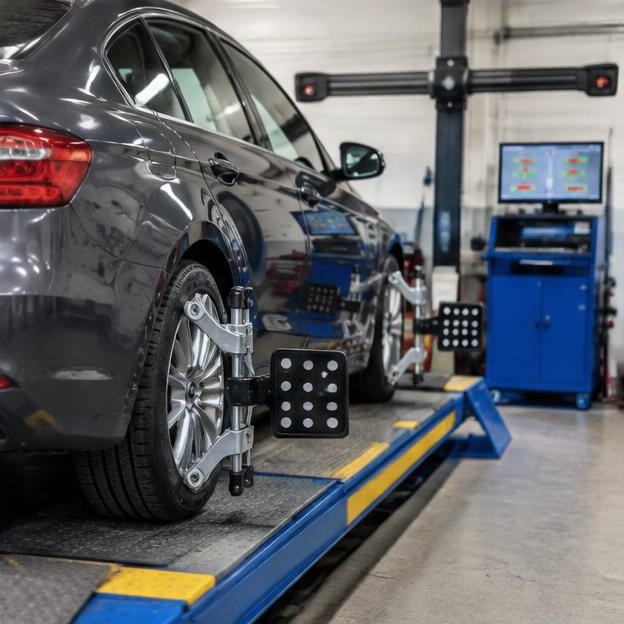
Wheel alignment, sometimes called tracking, refers to adjusting the angles at which a vehicle's wheels meet the road so they match the manufacturer's specification. Three angles matter most: toe, camber and caster, and each affects handling, tyre wear and steering feel in a different way. Getting these angles wrong, even slightly, causes uneven tyre wear, can make a car pull to one side, and affects how the vehicle behaves under braking and cornering.
Toe describes whether the front edges of the tyres point slightly inward (toe-in) or slightly outward (toe-out) relative to the vehicle's centreline when viewed from above. Camber describes whether the top of the wheel leans inward or outward relative to vertical when viewed from the front. Caster describes the angle of the steering axis when viewed from the side, and affects steering stability and how readily the steering self-centres after a turn. All three are set to a precise range by the manufacturer, and even small deviations outside that range have a measurable effect on the car.
There is a meaningful difference between a basic tracking check, which typically adjusts front toe only, and full four-wheel geometry. Full geometry measures and, where adjustable, corrects toe, camber and caster at all four corners against manufacturer specification. Many modern vehicles, particularly those with independent rear suspension, have adjustable rear geometry as well as front. A front-only tracking adjustment on such a vehicle may not fully resolve a wear or handling issue rooted at the rear.
One of the most important things to get right before adjusting alignment is establishing why it went out of specification in the first place. A kerb impact, a pothole strike, or a worn suspension component such as a track rod end, ball joint or bush can all knock alignment out. If a worn part is the cause, adjusting the geometry without replacing that part will not hold the correction, since the worn component will continue to move and the alignment will drift back out. We always check suspension and steering component condition before carrying out an alignment adjustment.
How it works
Symptom and history check
We discuss the specific symptom, whether pulling, uneven wear or an off-centre wheel, and any recent kerb impact or suspension work carried out.
Suspension and steering inspection
We check for worn track rod ends, ball joints, bushes and other components, since a worn part causing misalignment must be addressed before adjustment will hold.
Geometry measurement
The vehicle is placed on alignment equipment to measure toe, camber and caster against manufacturer specification at all four corners where applicable.
Adjustment
Adjustable angles are corrected to specification, or to an agreed alternative specification where the vehicle has modified suspension intended for a different handling characteristic.
Verification and road test
Final measurements are checked against target values and the vehicle is road tested to confirm the pulling or off-centre steering symptom is resolved.
Capability
Toe is the easiest of the three to picture: stand above the car and look down at the front wheels. If they point very slightly toward each other at the front, that is toe-in; if they point slightly apart, that is toe-out. Even a small amount outside specification causes the tyre to scrub sideways slightly as it rolls, which shows up as wear across one edge of the tread over time.
Camber is the lean of the wheel viewed from the front of the car. Negative camber means the top of the wheel leans in toward the car; positive camber means it leans out. Manufacturers specify a small amount of camber for handling reasons, and incorrect camber concentrates tyre wear on one edge of the contact patch specifically, rather than evenly across the tread.
Caster is harder to picture because it is viewed from the side and relates to the angle of the steering axis rather than the wheel itself. It affects how stable the steering feels at speed and how strongly it self-centres after a turn; incorrect caster can make a car feel vague or reluctant to return to straight-ahead after cornering.
A basic tracking check adjusts front toe only and can resolve simple straight-line pulling or edge wear caused purely by toe. Full geometry measures and, where the vehicle allows adjustment, corrects camber and caster too, and includes the rear axle, which matters increasingly on modern vehicles with adjustable independent rear suspension.
Worn components must be ruled out or replaced before alignment. This is because adjusting the geometry on a car with a worn track rod end, ball joint or bush corrects the angle only briefly. The worn part continues to move under load, and the alignment drifts back out, often within a short period.
Alignment adjustment corrects the angle of components that are otherwise sound. If a track rod end, ball joint or suspension bush is worn, adjusting alignment without replacing that part is only a temporary fix. This is because the worn component will continue to move, and the geometry will drift back out of specification. We always inspect for this before recommending an alignment adjustment.
Why 360
Garage, MOT, diagnostics, mechanical repairs, performance and alloy-wheel refurbishment.
119 Unit 4 Loverock Road, Reading, RG30 1DZMonday – Friday: 9:00am – 6:00pm
Weekend: By appointment only
Questions
Related work
360 Garage
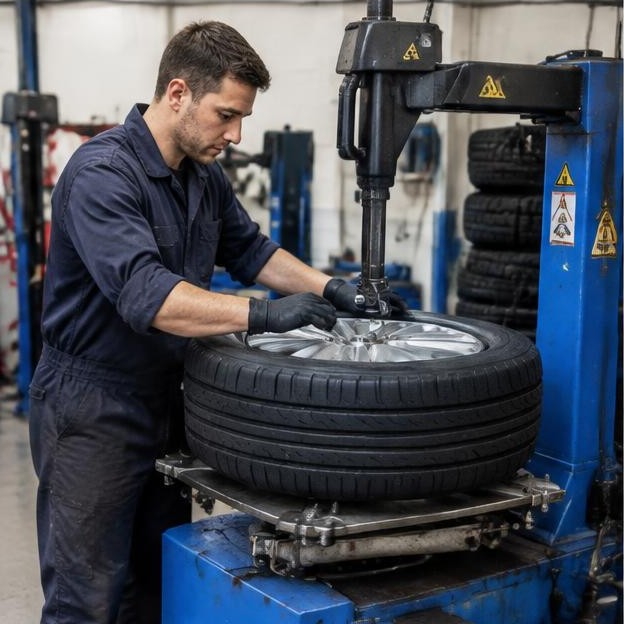
Tyre fitting, puncture repair assessment, balancing and wear diagnosis in Reading, matched correctly to your vehicle.
360 Garage
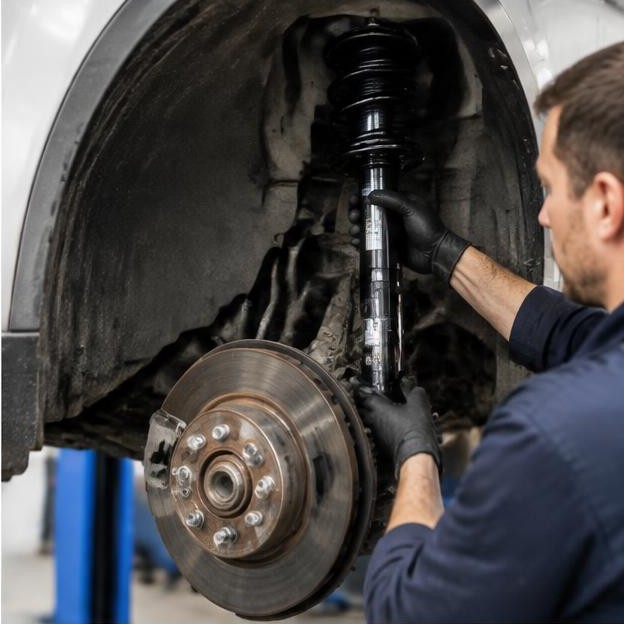
Dampers, springs, bushes, ball joints and steering repairs in Reading, with proper inspection for knocks, uneven tyre wear and wandering.
360 Garage
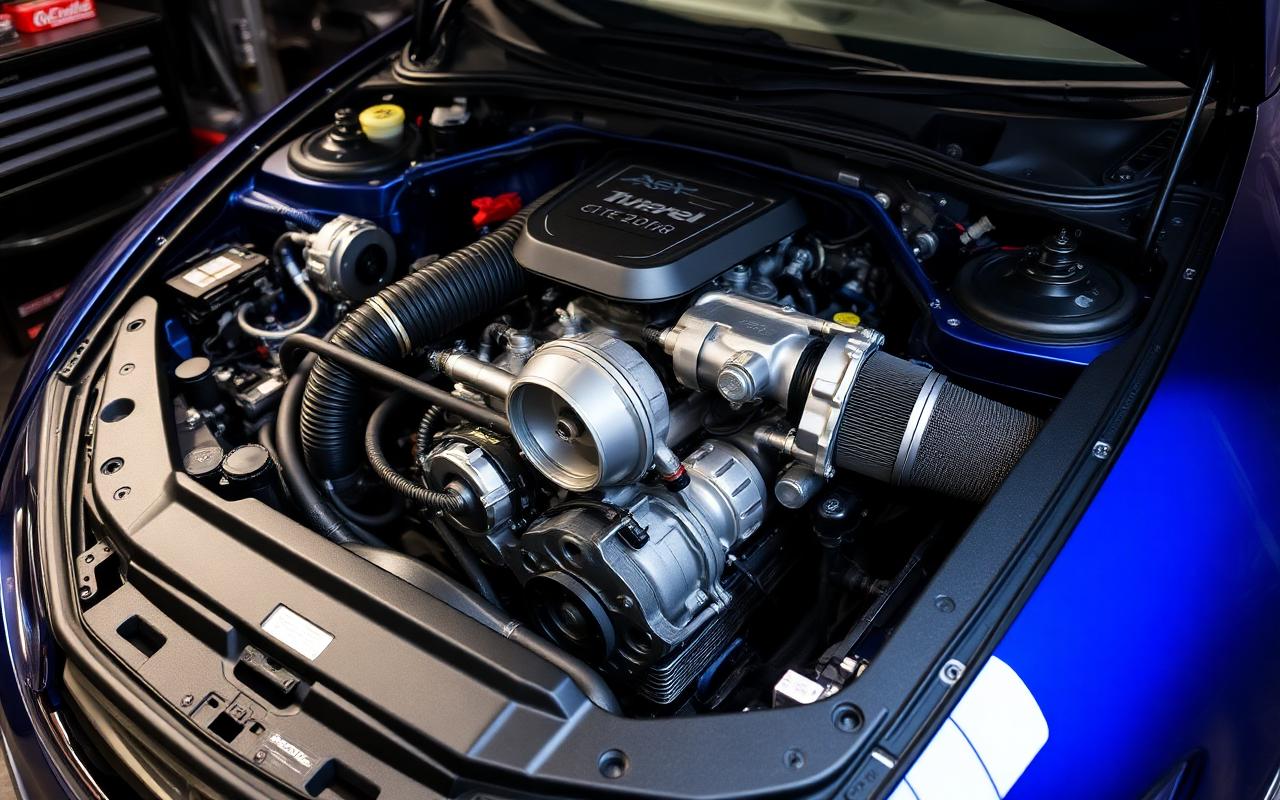
In-house ECU remapping and performance upgrades in Reading. Suitability assessed first, no promised power figures, dyno via partner facilities.
360 Garage
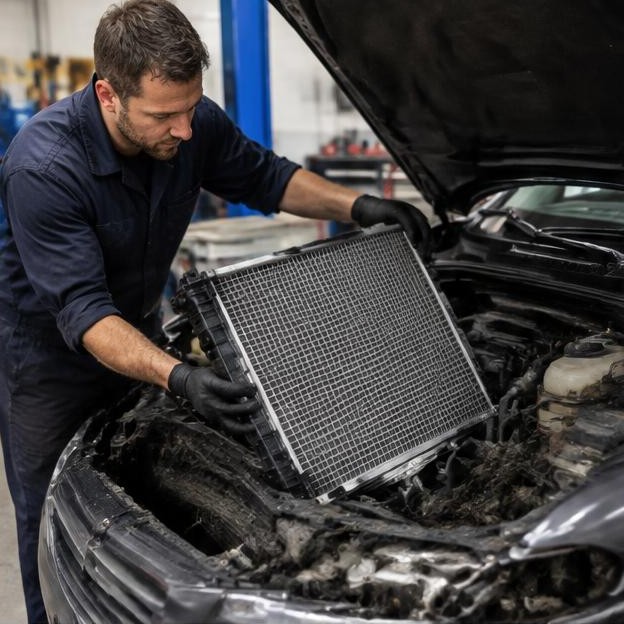
Mechanical repairs in Reading covering engine, cooling, electrical, exhaust and starting faults on all makes and models, with clear findings before any work.
All 360 Garage servicesLoverock Road, ReadingAreas we coverContact 360
360 Garage
MOTs, servicing, diagnostics, repairs and performance upgrades.