Loverock Road, Reading
- 360 Garage
- 360 Alloys
Garage, MOT, diagnostics, mechanical repairs, performance and alloy-wheel refurbishment.
119 Unit 4 Loverock Road, Reading, RG30 1DZMonday – Friday: 9:00am – 6:00pm
Weekend: By appointment only
360 Alloys
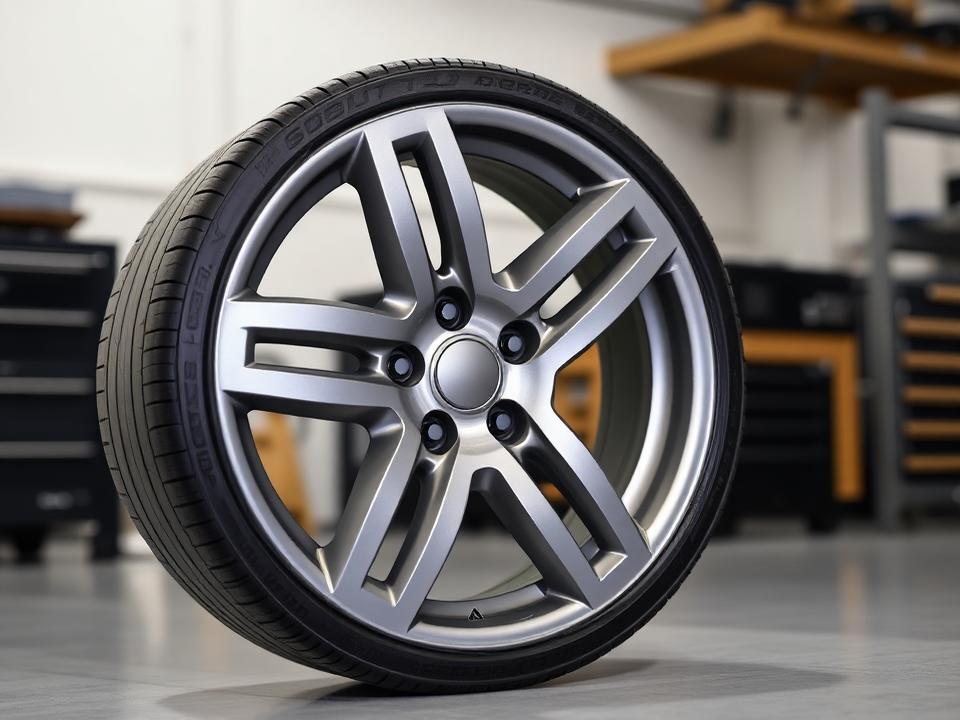
Diamond cutting machines a thin layer off the face of the wheel to expose bright, bare alloy under a protective lacquer, giving the sharp two-tone look many factory wheels are finished with. We cut every wheel on our own in-house lathe and check its condition carefully before agreeing to cut it again.
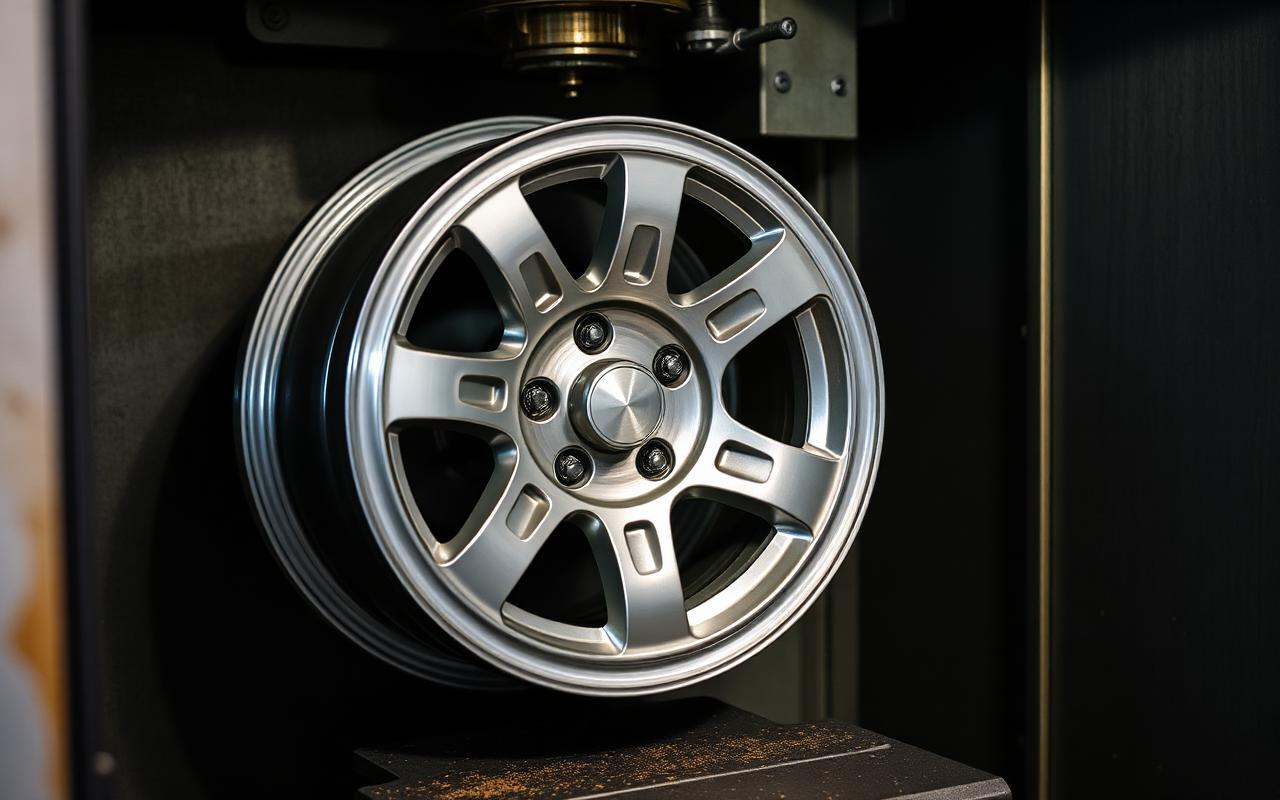
Diamond cutting is a machining process rather than a paint finish. The wheel is mounted on a precision lathe, and a fine cutting tool removes a very thin layer from the face of the wheel. This exposes bright bare aluminium in a crisp pattern — typically the raised spoke faces against a painted background. It is what gives many factory alloy wheels their two-tone look, with the machined face contrasting against the painted insert colour.
Because it is a cutting process rather than a coating, it behaves differently to paint or powder coat in a few important ways. The finish depends entirely on precise, even material removal, which means the wheel needs to be properly centred and balanced on the lathe before cutting begins. Any wobble or misalignment shows up immediately as an uneven cut, which is why this work needs to be done on purpose-built equipment by someone experienced with it, not attempted with generic tools.
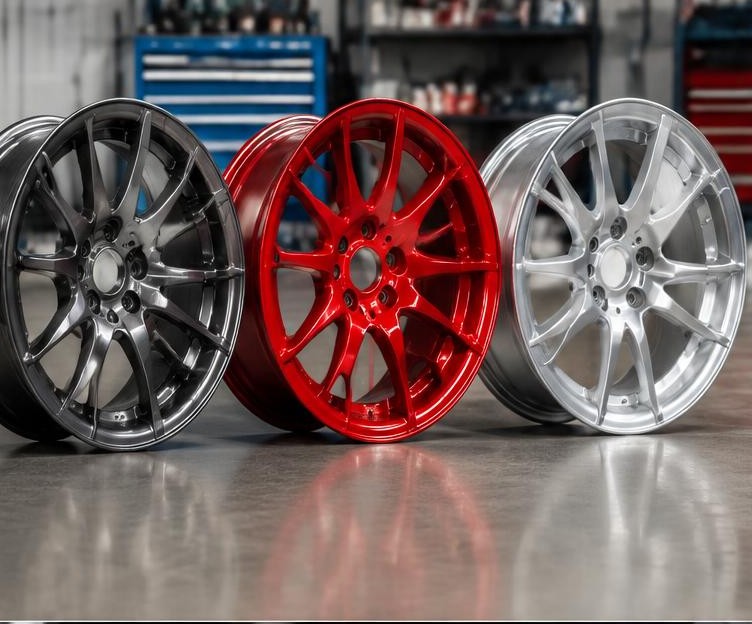
Painted inserts are usually applied before the cutting stage, or occasionally after, depending on the wheel's design and the specific look being achieved. We assess each wheel's original design and, where you are after a factory-style finish, aim to match the insert colour and cut pattern the wheel would have carried originally. For a custom look, we discuss the insert colour with you directly.
Once the machining is complete, a clear protective lacquer is applied over the bare cut alloy and cured. This lacquer is doing a genuinely important job: bare aluminium corrodes if left exposed, so the lacquer is the only thing standing between the freshly cut surface and moisture, road salt and general weather. When that lacquer eventually fails — through age, stone chips, or harsh wheel-cleaning chemicals — the exposed alloy underneath begins to corrode. This shows up as a dull, grey, sometimes pitted ring where the bright cut finish used to be.
How it works
Inspection and material assessment
We check the wheel's condition and, where its cutting history is known or evident, assess how much material realistically remains before deciding whether another cut is appropriate.
Preparation and insert masking
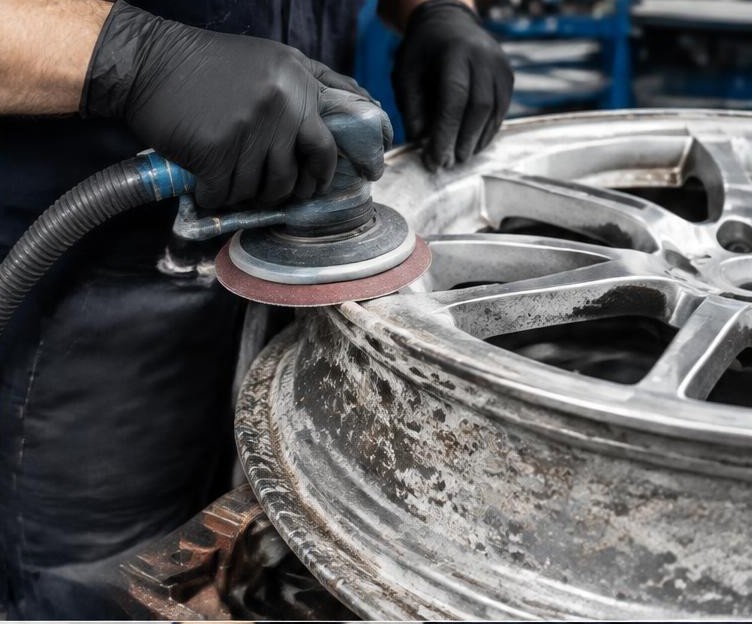
The wheel is cleaned and prepared, and any painted insert areas are masked ahead of colour application, protecting the areas that will remain painted rather than cut.
Insert colour application
The insert colour is applied and cured before machining begins, so the cut face reveals crisp bare alloy against a clean, finished background colour.
Precision lathe cutting
The wheel is centred and mounted on our in-house lathe, and a fine cutting tool removes a thin, even layer to expose bright bare alloy in the wheel's original or agreed pattern.
Lacquer application and curing
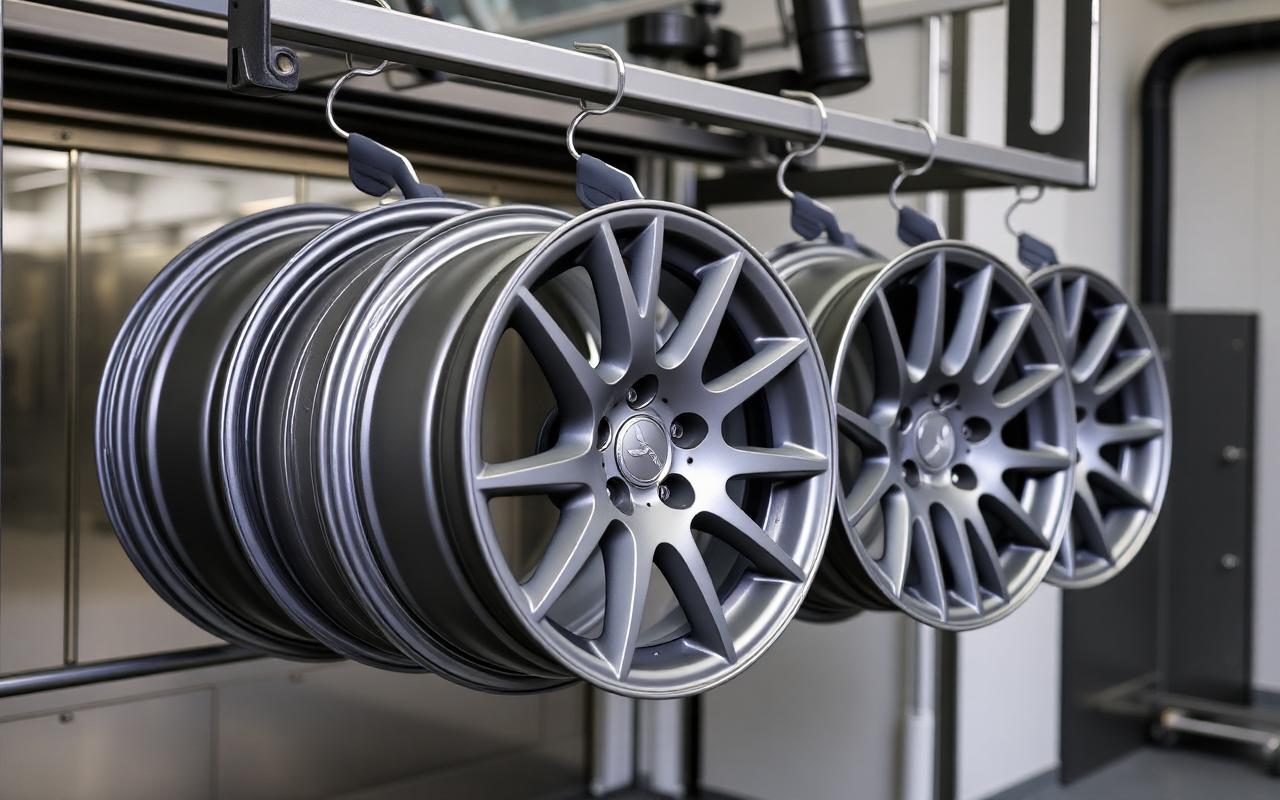
A clear protective lacquer is applied immediately over the freshly cut surface and cured, since bare aluminium corrodes quickly once exposed to air and moisture.
Final inspection
The finished wheel is checked for even cutting, consistent lacquer coverage and correct insert colour before being signed off.
Capability
The lathe rotates the wheel at a controlled speed while a fixed cutting tool takes a precise, shallow pass across the face, following the wheel's spoke geometry. The result is a mirror-bright, slightly textured cut finish that reflects light differently to paint, which is the visual effect people are after when they choose diamond cutting over a standard painted face.
Because material is physically removed with each cut, the process is not infinitely repeatable. A wheel with generous original material and no prior cuts can typically be cut safely. A wheel that has already been cut two or three times has progressively less to work with. Cutting it further risks thinning the face beyond what is safe, or removing enough material that lacquer adhesion and durability suffer.
Corrosion under a failed lacquer is a genuine complication for diamond cutting, because pitting caused by corrosion sits below the original surface. Cutting can sometimes remove shallow pitting, but only if there is enough remaining material to cut below the depth of the pits. Deep corrosion pitting may not be fully removable by cutting alone without taking off more material than is safe.
This is why we always inspect before cutting rather than agreeing to a recut automatically. Where a wheel is a poor candidate for further cutting, we explain the reasoning and discuss powder coating as the safer alternative. It rebuilds a durable, even finish without removing any further material from the wheel.
Aftercare matters more with diamond-cut wheels than with a standard painted finish, because the exposed cut surface under the lacquer has no paint layer to fall back on if the lacquer is damaged. Avoiding harsh acidic wheel cleaners, promptly addressing any stone chips to the lacquer, and regular washing to remove road salt all help the finish last as long as possible.
If our inspection shows a wheel has little safe material left, has been cut multiple times previously, or has corrosion pitting deeper than can be safely removed, we will not proceed with another cut. In these cases we will recommend powder coating or another suitable finish instead, to avoid compromising the wheel.
Why 360
Warranty
Garage, MOT, diagnostics, mechanical repairs, performance and alloy-wheel refurbishment.
119 Unit 4 Loverock Road, Reading, RG30 1DZMonday – Friday: 9:00am – 6:00pm
Weekend: By appointment only
Questions
Related work
360 Alloys
Complete in-house alloy wheel refurbishment in Reading: strip, repair, prime, finish and lacquer, with a twelve-month warranty.
360 Alloys
Durable in-house powder coating for alloy wheels in Reading, with gloss, satin and matt options and proper corrosion preparation.
360 Alloys
Alloy wheel corrosion repair in Reading, properly stripping and treating lacquer failure, pitting and bead-seat corrosion.
360 Alloys
OEM-style, custom and shadow finishes for alloy wheels in Reading, with colour sampling and consistent results across a full set.
All 360 Alloys servicesLoverock Road, ReadingAreas we coverContact 360
360 Alloys
Complete wheel refurbishment, diamond cutting and structural alloy repair.