Loverock Road, Reading
- 360 Garage
- 360 Alloys
Garage, MOT, diagnostics, mechanical repairs, performance and alloy-wheel refurbishment.
119 Unit 4 Loverock Road, Reading, RG30 1DZMonday – Friday: 9:00am – 6:00pm
Weekend: By appointment only
360 Garage
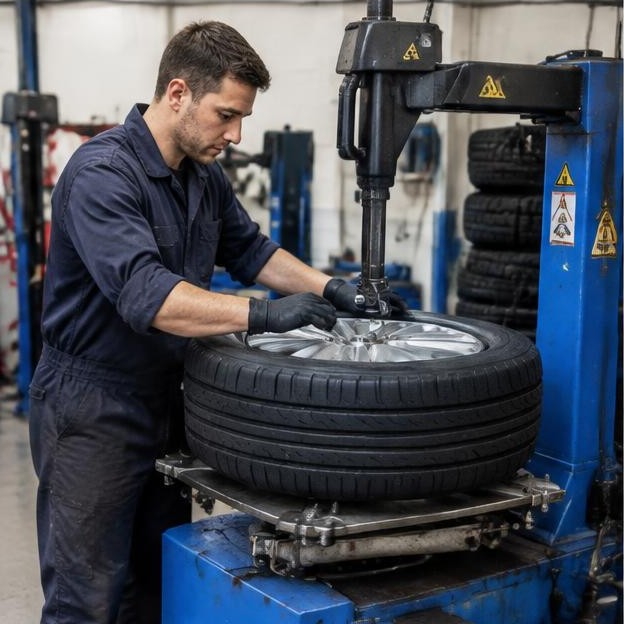
Tyres are the only part of the car in contact with the road, and getting the right tyre, correctly fitted, balanced and matched, affects safety, handling and how evenly the set wears. We assess each tyre honestly, including when a puncture repair is not appropriate and replacement is the safer option.
A tyre's tread pattern is designed to channel water away from the contact patch and maintain grip in wet conditions. As tread wears down, that ability to disperse water reduces, increasing the risk of aquaplaning. UK law requires a minimum tread depth of 1.6mm across the central three-quarters of the tyre's width around its entire circumference. However, from a genuine safety perspective, performance in wet conditions noticeably declines well before tread reaches the legal minimum. This is why we always recommend considering replacement earlier than the legal cut-off.
The sidewall of a tyre carries information that matters beyond the brand name. The tyre size, load rating and speed rating are all specified by the vehicle manufacturer for good reason, since they relate directly to how much weight the tyre is designed to carry safely and at what maximum speed. Fitting a tyre with a lower load or speed rating than specified can compromise safety, particularly under load or at speed. We always check the correct rating for a vehicle before fitting, rather than assuming a size match alone is sufficient.
Tyre pressure is one of the simplest things to check and one of the most commonly neglected. Under-inflated tyres wear unevenly across the tread, generate excess heat that increases the risk of failure, and increase fuel consumption. Over-inflated tyres, meanwhile, reduce the size of the contact patch and can make the ride harsher and reduce grip. Correct pressure is specific to the vehicle and its load, not a generic figure, and is checked as standard whenever a vehicle comes in for tyre work.
When a puncture occurs, not every tyre can be safely repaired. A puncture in the central tread area, of a limited size and within the tyre's usable tread life, can often be repaired properly using an internal patch-plug combination rather than an external plug alone. A puncture in the sidewall, a puncture affecting the tyre's structural integrity, or a tyre that has been run flat and suffered internal damage cannot be safely repaired. We assess each case individually rather than defaulting to either repair or replacement automatically.
How it works
Visual and measured inspection
Each tyre is checked for tread depth, sidewall condition, uneven wear and manufacture date before any recommendation is made.
Pressure check
Pressures are checked and corrected to the vehicle-specific figure, since correct pressure affects both safety and even tyre wear.
Puncture or damage assessment
Where a puncture or damage is present, we assess its size, location and depth to establish honestly whether a safe repair is possible.
Repair or replacement
A safe puncture is repaired using a proper internal patch-plug method, or the tyre is replaced with one matched correctly for size, load and speed rating if repair is not appropriate.
Balancing
The wheel and tyre assembly is balanced on a wheel balancer to prevent vibration at speed.
Final check and advice
We confirm correct pressures and torque, and explain any wear pattern findings that suggest a separate underlying issue worth investigating.
Capability
Tread patterns are engineered with channels (grooves) that disperse water from beneath the tyre, reducing the risk of aquaplaning in wet weather. As tread wears, that channel depth reduces, and wet-weather grip and braking distance both worsen measurably before the legal minimum of 1.6mm is reached.
The sidewall carries a size code, a load index and a speed rating, all specified by the vehicle manufacturer to match the car's weight, performance and intended use. Fitting a tyre with a lower load or speed rating than specified is not simply a preference issue; it can genuinely compromise the tyre's ability to perform safely under the vehicle's actual demands.
Uneven wear tells a story. Wear across both outer edges typically suggests under-inflation, and wear concentrated in the centre suggests over-inflation. Wear on one edge only often points to an alignment fault, and patchy or scalloped wear can indicate worn suspension components such as dampers. Reading the wear pattern correctly avoids replacing a tyre without addressing the cause that will simply wear the replacement the same way.
Tyre age is coded into the sidewall as a four-digit date stamp showing the week and year of manufacture. Rubber compounds harden and lose flexibility over time regardless of tread depth or mileage. A tyre that looks visually fine but is significantly aged can have reduced grip and an increased risk of cracking. This is particularly relevant for spare tyres and low-mileage vehicles.
Electric vehicles add significant weight from the battery pack, and deliver high torque instantly from a standstill. Both of these factors increase tyre wear rates and put more demand on the tyre's structure than an equivalent combustion vehicle. EV-rated tyres are built to cope with this, typically with reinforced sidewalls and compounds suited to the extra load.
Not every puncture can be repaired. Damage to the sidewall, a puncture outside the central tread area, damage from running the tyre while flat, or a tyre with tread already close to the legal minimum are all situations where a safe, lasting repair is not possible. We will recommend replacement rather than attempt a repair that would not hold safely.
Why 360
Garage, MOT, diagnostics, mechanical repairs, performance and alloy-wheel refurbishment.
119 Unit 4 Loverock Road, Reading, RG30 1DZMonday – Friday: 9:00am – 6:00pm
Weekend: By appointment only
Questions
Related work
360 Garage
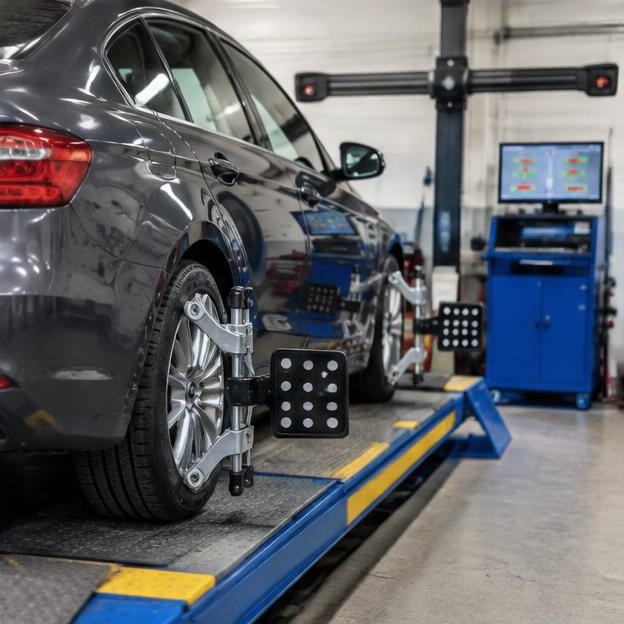
Wheel alignment and tracking in Reading, correcting toe, camber and caster to stop pulling, uneven wear and off-centre steering.
360 Garage
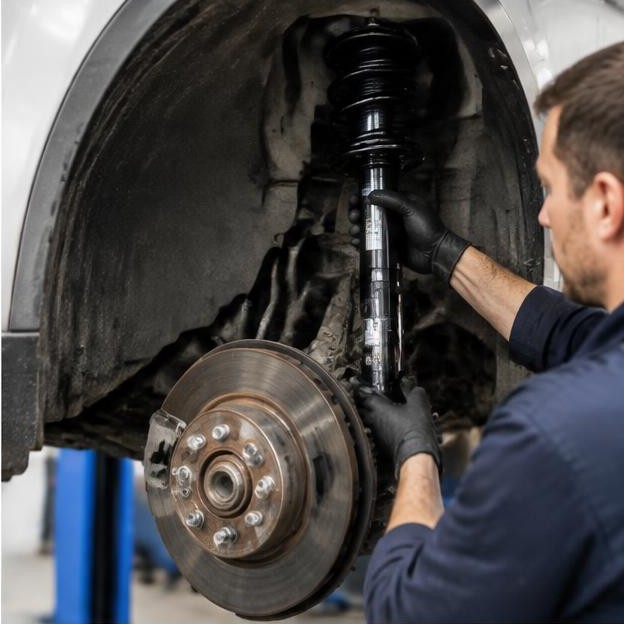
Dampers, springs, bushes, ball joints and steering repairs in Reading, with proper inspection for knocks, uneven tyre wear and wandering.
360 Garage
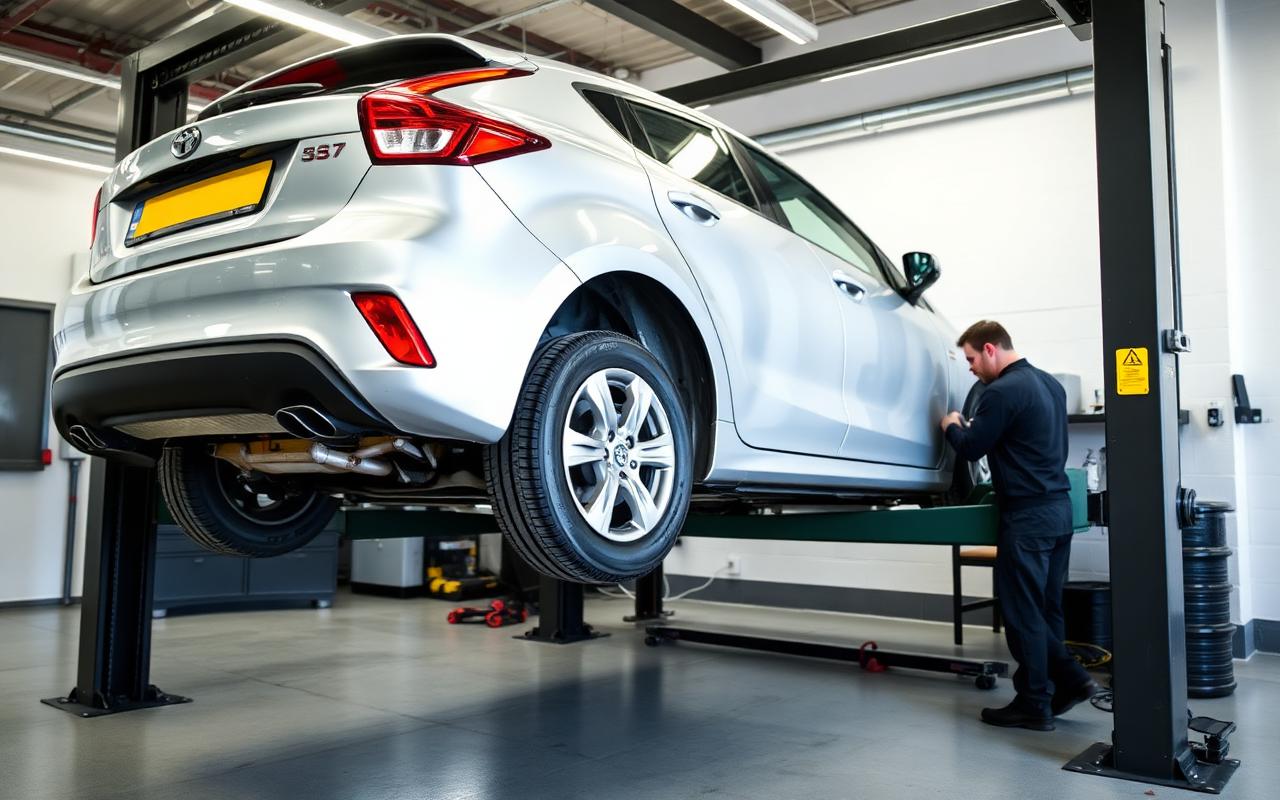
Interim, full and manufacturer-schedule servicing in Reading for all makes and models, with digital service records and warranty preserved.
360 Garage
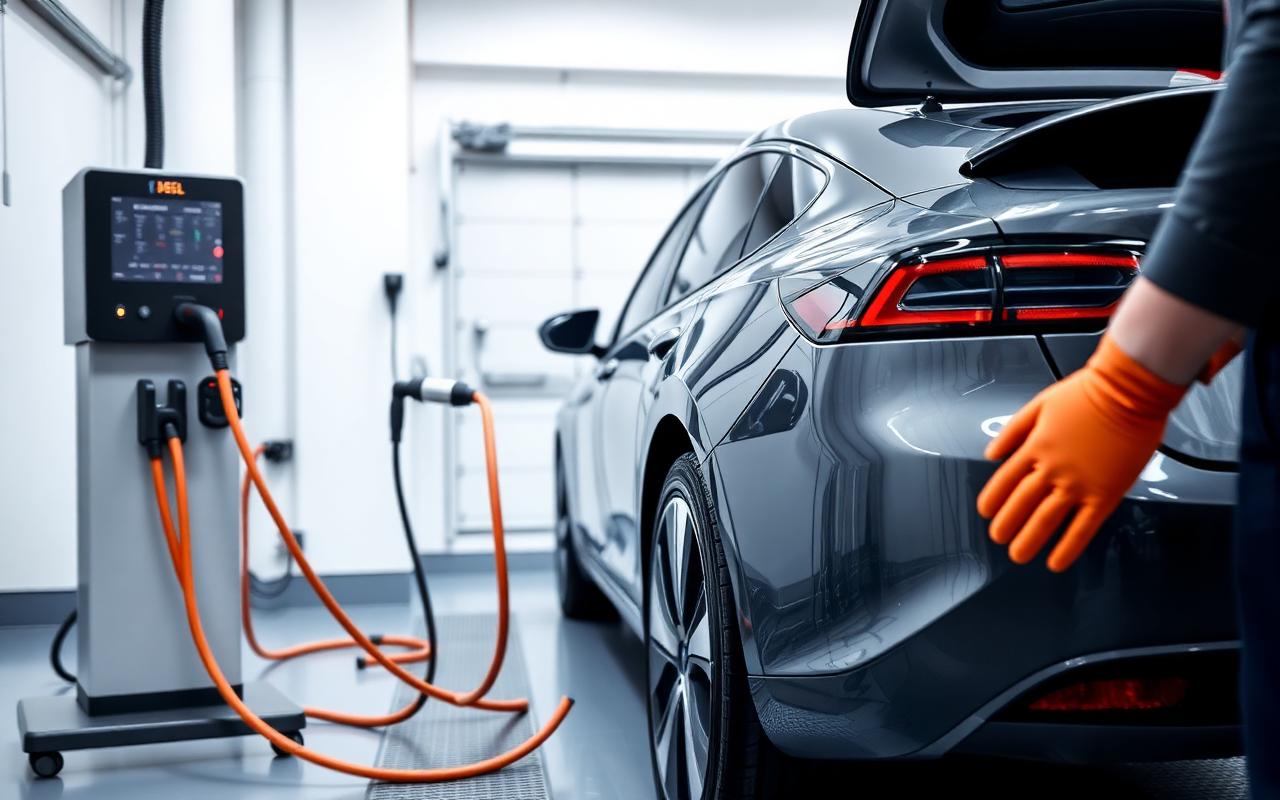
High-voltage qualified electric and hybrid vehicle servicing in Reading, covering routine maintenance, brakes, cooling and 12V systems.
All 360 Garage servicesLoverock Road, ReadingAreas we coverContact 360
360 Garage
MOTs, servicing, diagnostics, repairs and performance upgrades.