Loverock Road, Reading
- 360 Garage
- 360 Alloys
Garage, MOT, diagnostics, mechanical repairs, performance and alloy-wheel refurbishment.
119 Unit 4 Loverock Road, Reading, RG30 1DZMonday – Friday: 9:00am – 6:00pm
Weekend: By appointment only
360 Alloys
A proper alloy wheel refurbishment strips each wheel back to bare metal, repairs the damage underneath and rebuilds the finish in stages rather than painting over the problem. It is a genuine workshop process, not a same-day cosmetic wipe-over, and every refurbished wheel leaves us with a twelve-month warranty, subject to terms.
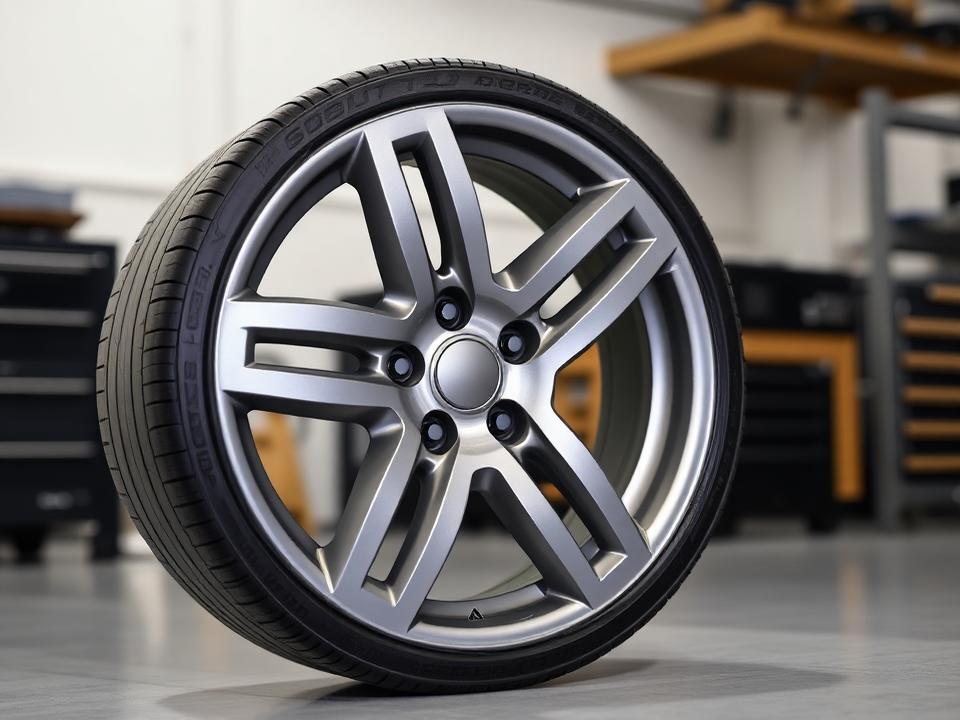
Alloy wheels take a genuine battering over the years. Kerbs, potholes, winter salt and years of automatic car washes leave scuffed edges, corrosion under the lacquer and a finish that no longer matches how the car looked when it left the factory. A refurbishment is our answer to that. Rather than covering the wheel with a fresh coat of paint, we take the wheel off the car, strip the old finish away entirely, and rebuild it properly from the bare alloy upwards.
This matters because a wheel that looks tired on the surface is often hiding more underneath. Lacquer that has started to lift or bubble is usually a sign that moisture has already got underneath it and started attacking the alloy. Kerb damage that looks like a scuff is sometimes a deeper gouge that has taken material away from the rim. You cannot see the true extent of either of these until the old finish is off. This is exactly why we do not offer to refurbish a wheel from a photograph alone — every wheel is properly assessed once it is stripped.
How we decide what a wheel needs is straightforward but important to explain. A wheel with light cosmetic scuffing and no structural concern is a candidate for a cosmetic touch-up, which is a lighter, faster job focused on the visible damage. A wheel with corrosion, deeper kerb damage, a poor previous repair, or a finish that needs to come off entirely to be corrected is a candidate for complete refurbishment. Where we find cracking, significant bending, or damage close to the wheel's structural areas during that assessment, we will tell you honestly. Some damage needs repair work — or in some cases replacement — rather than refinishing over the top of it. We never disguise a structural problem with paint.
Cost on a refurbishment is driven by a genuine set of factors rather than a flat per-wheel rate. These include the wheel's size and design — a multi-spoke or diamond-cut wheel takes longer to mask and finish than a simple five-spoke design. They also include the extent of corrosion or kerb damage found once the wheel is stripped, and the finish you choose. Further factors are whether all four wheels are being done to the same standard, and whether tyres need to be removed and refitted as part of the job. We will always explain what has driven the cost of your particular wheels rather than quoting a number with no context.
How it works
Initial inspection
Every wheel is inspected on arrival with the tyre still fitted, checking for obvious cracks, heavy corrosion or damage close to the wheel's structural areas that might affect whether refurbishment is appropriate at all.
Tyre, valve and weight removal
The tyre is removed from the rim, along with the valve and any existing balance weights, giving full access to every part of the wheel including areas hidden by the tyre bead.
Stripping and full damage assessment
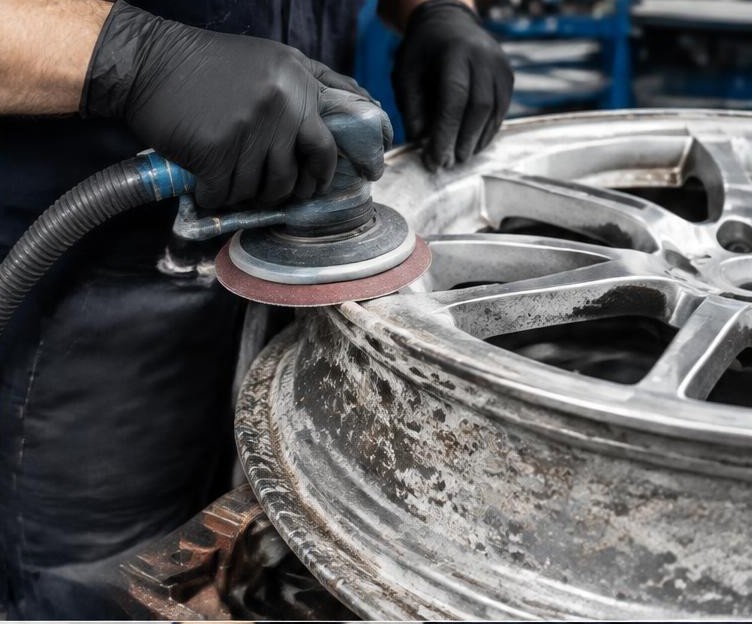
The wheel is stripped of all existing paint and lacquer, and only once it is bare can we properly see and assess corrosion, pitting, filler from a previous repair, or any deeper damage.
Preparation and repair
Kerb damage and pitting are repaired, corroded material is treated back to a sound surface, and the wheel is prepared and keyed ready to accept primer evenly across the whole surface.
Priming and finish application
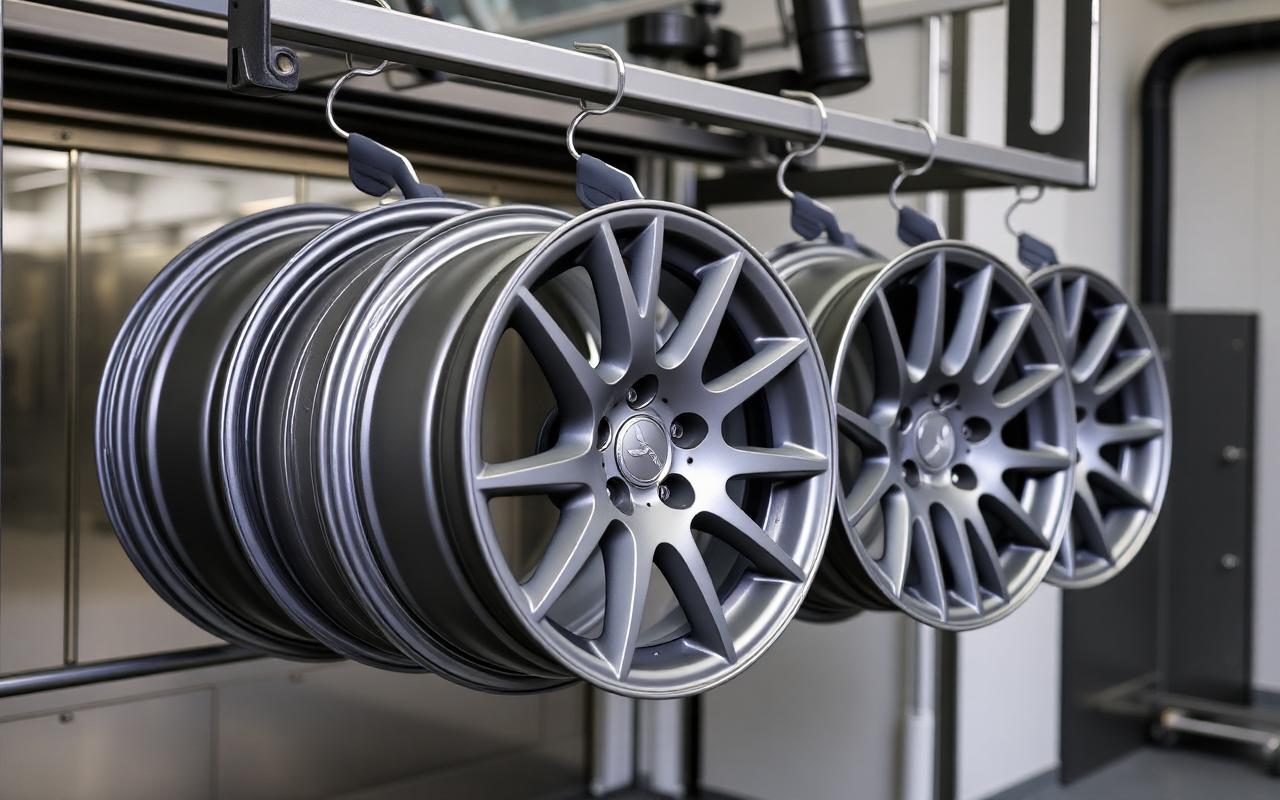
Primer is applied first to promote adhesion and even coverage, followed by the agreed colour, diamond-cut machining, or powder-coated finish depending on what you have chosen.
Lacquer and curing
A protective lacquer is applied over the finish and cured for the time that finish requires — this is the stage that most affects long-term durability, so it is not rushed to save time.
Tyre refitting, balancing and final inspection
The tyre is refitted, the wheel is rebalanced on the vehicle's specification, and the finished wheel undergoes a final visual and functional inspection before it goes back on the car.
Capability
A cosmetic touch-up addresses visible surface damage — a scuffed edge, a small chip, light fading — without stripping the wheel back to bare metal. It is a genuinely useful option where the wheel's underlying finish and structure are sound. It is also faster and less involved than a complete refurbishment because far less of the wheel needs to be reworked.
A complete refurbishment removes the tyre, strips every layer of the old finish, and rebuilds the wheel from bare alloy through primer, finish and lacquer. It is the right choice where there is corrosion under the lacquer, deeper kerb damage, or a poor prior repair. It is also right where you want a genuinely even, uniform finish across the whole wheel rather than a patched area blended into old paint.
We will always recommend the option that matches what the wheel actually needs rather than defaulting to the more involved job. If a wheel only needs a touch-up, we will say so. If a wheel that looks like it only needs a touch-up turns out, once inspected, to have corrosion spreading under the lacquer, we will explain why a full refurbishment is the more sensible route.
Corrosion is one of the most common reasons a wheel needs full refurbishment rather than a touch-up. Alloy wheels are protected by their painted and lacquered finish. Once that finish is breached — by a stone chip, a kerb strike, or simple age — moisture reaches the bare alloy and starts to corrode it. That corrosion spreads under the surrounding lacquer even where the paint still looks intact, which is why we always strip fully rather than patching around visible corrosion.
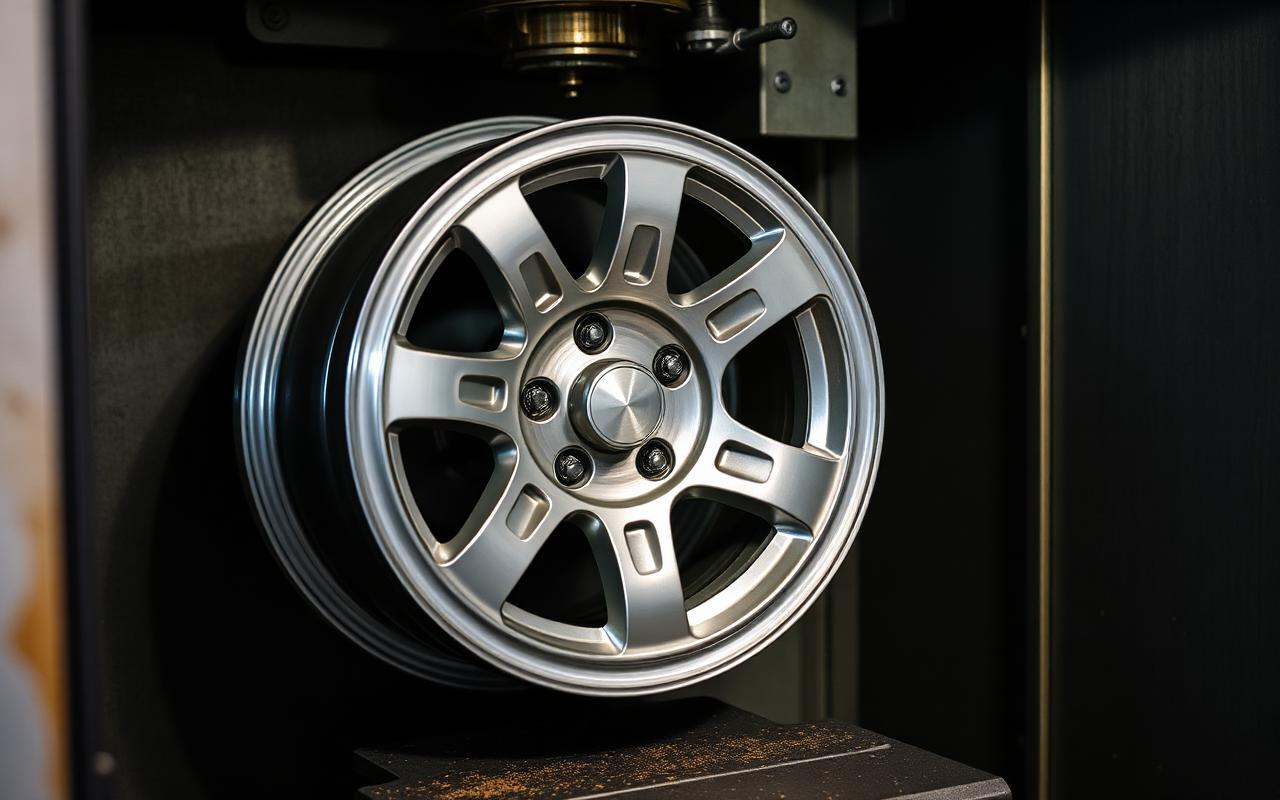
Finish choice also affects the process. A diamond-cut finish is machined on our in-house lathe to expose bright bare alloy under a clear lacquer. It has a finite number of times it can be re-cut before too much material has been removed. A painted or powder-coated finish does not have that limitation in the same way, since the colour sits on top of the surface rather than being cut into it. This makes it the safer long-term option for a wheel that has already been diamond-cut more than once.
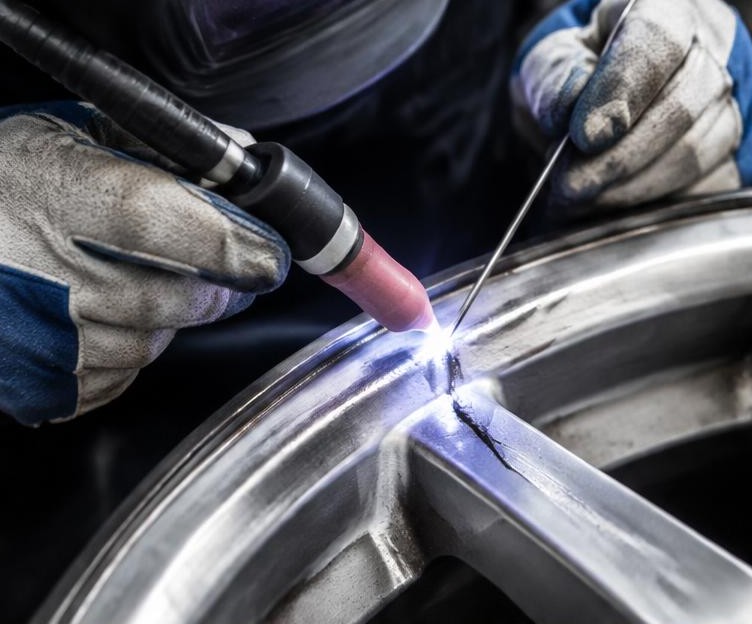
Refurbishment is a cosmetic and protective process, not a structural repair. If our inspection finds cracking, significant bending, or damage in a structural area of the wheel, we will tell you before proceeding. Those wheels need dedicated repair assessment or, in some cases, replacement. We will not refinish over a wheel we are not confident is sound to run on the road.
Why 360
Getting your vehicle to us
Warranty
Garage, MOT, diagnostics, mechanical repairs, performance and alloy-wheel refurbishment.
119 Unit 4 Loverock Road, Reading, RG30 1DZMonday – Friday: 9:00am – 6:00pm
Weekend: By appointment only
Questions
Related work
360 Alloys
In-house diamond cutting for alloy wheels in Reading, machined on our own lathe with corrosion checked before every cut.
360 Alloys
Durable in-house powder coating for alloy wheels in Reading, with gloss, satin and matt options and proper corrosion preparation.
360 Alloys
Alloy wheel corrosion repair in Reading, properly stripping and treating lacquer failure, pitting and bead-seat corrosion.
360 Alloys
Careful assessment and repair of cracked alloy wheels in Reading, with honest advice when a wheel cannot be safely repaired.
360 Alloys
Assessment and controlled straightening of buckled alloy wheels in Reading, with structural and crack checks before repair.
All 360 Alloys servicesLoverock Road, ReadingAreas we coverContact 360
360 Alloys
Complete wheel refurbishment, diamond cutting and structural alloy repair.